Overexposed
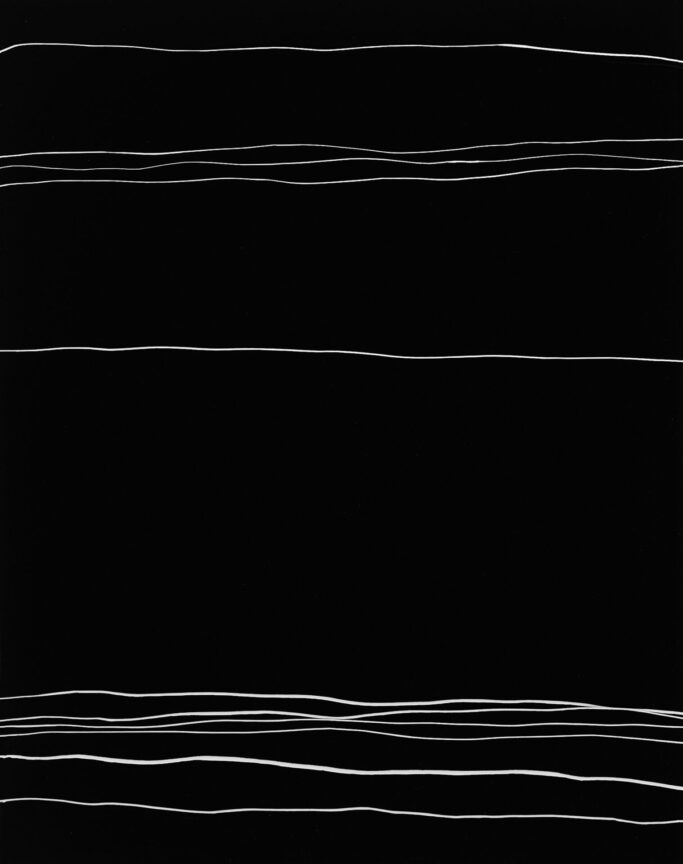
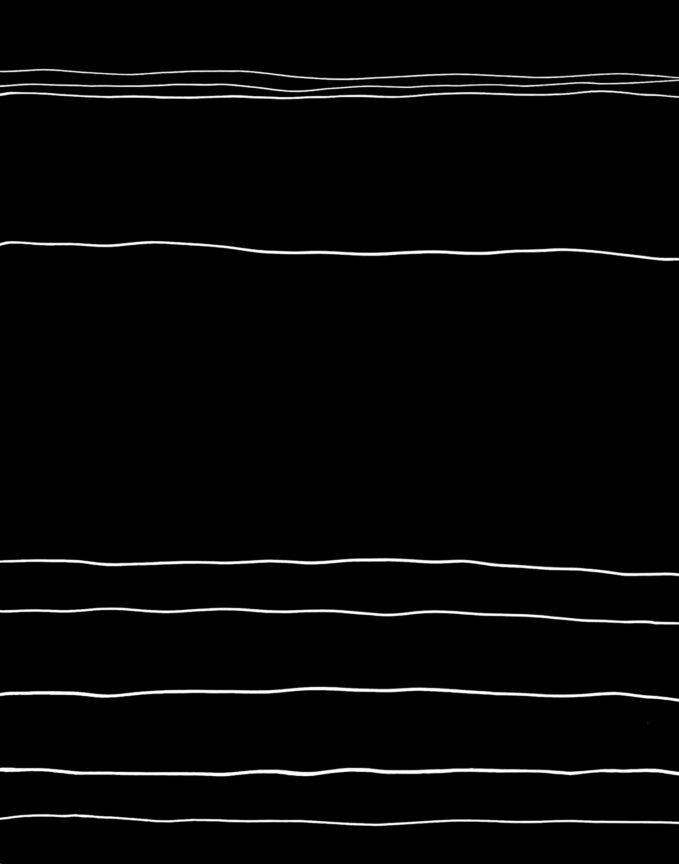
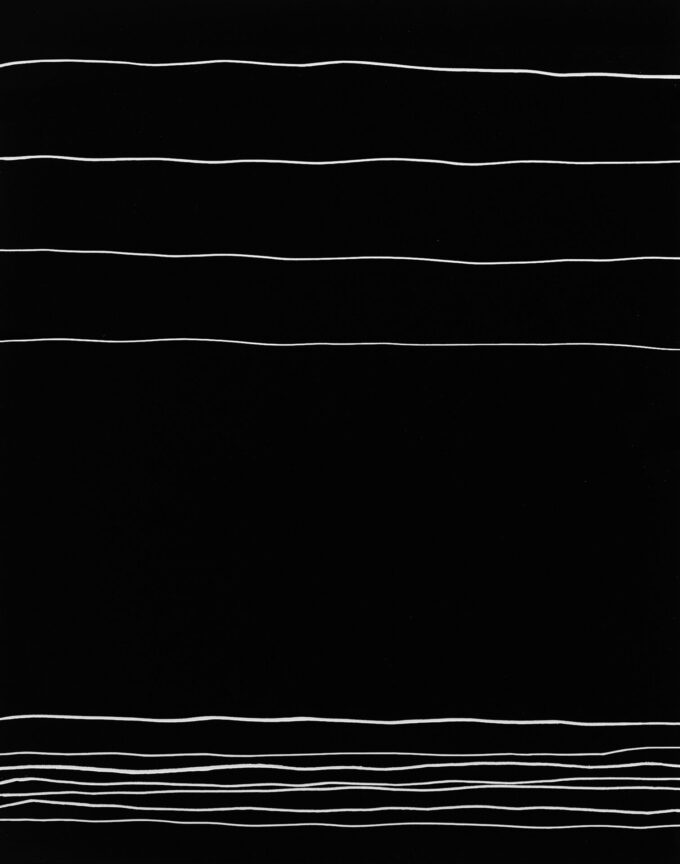
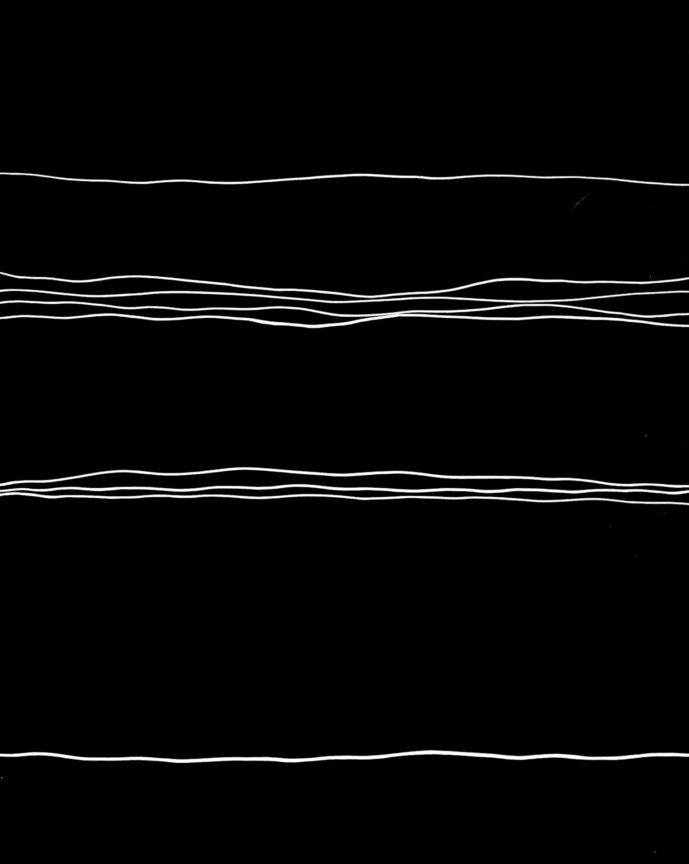
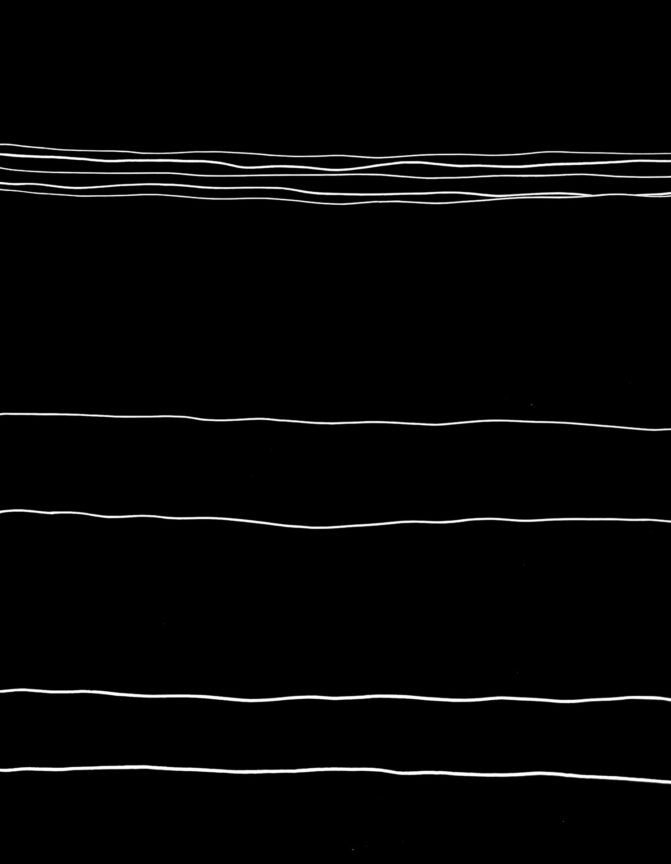
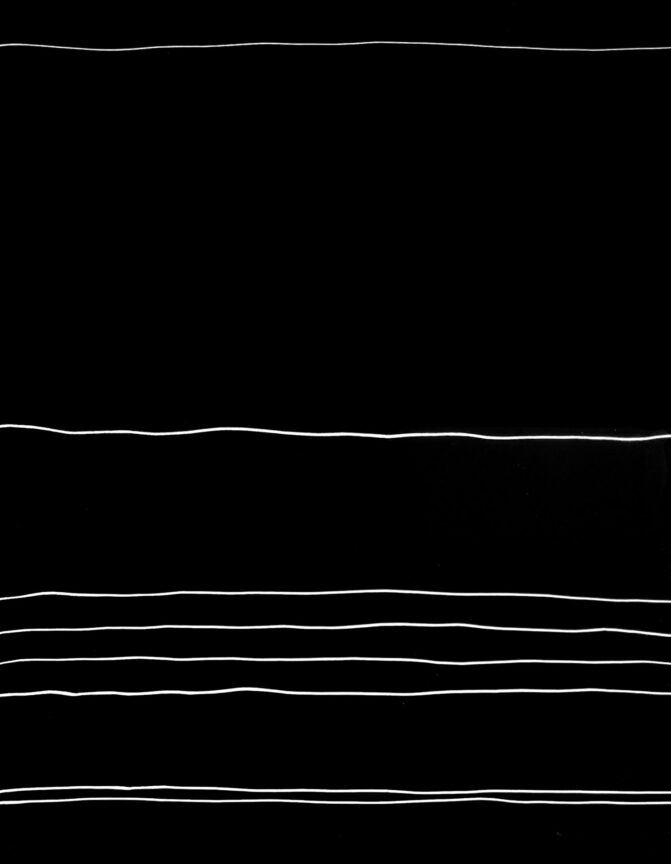
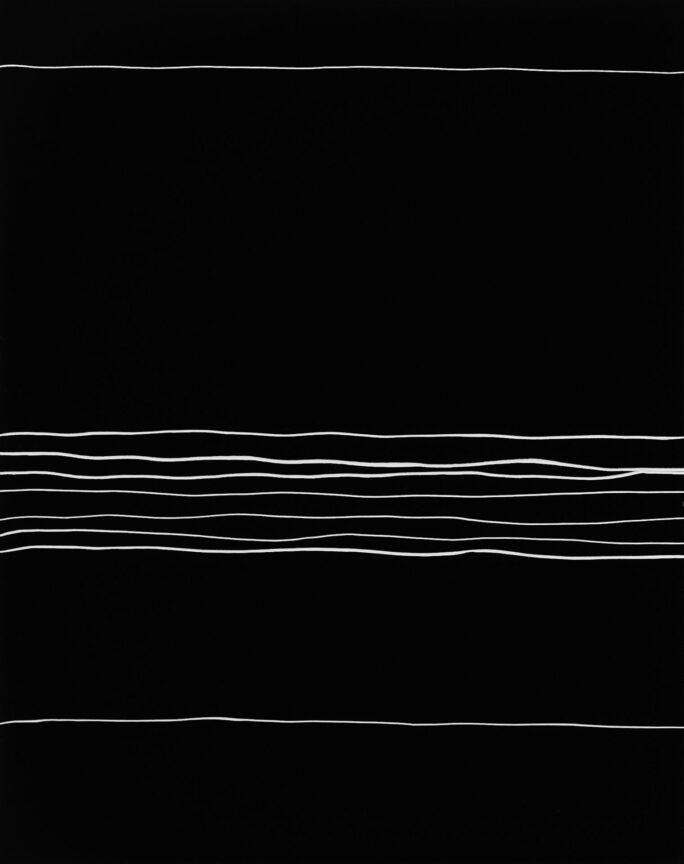
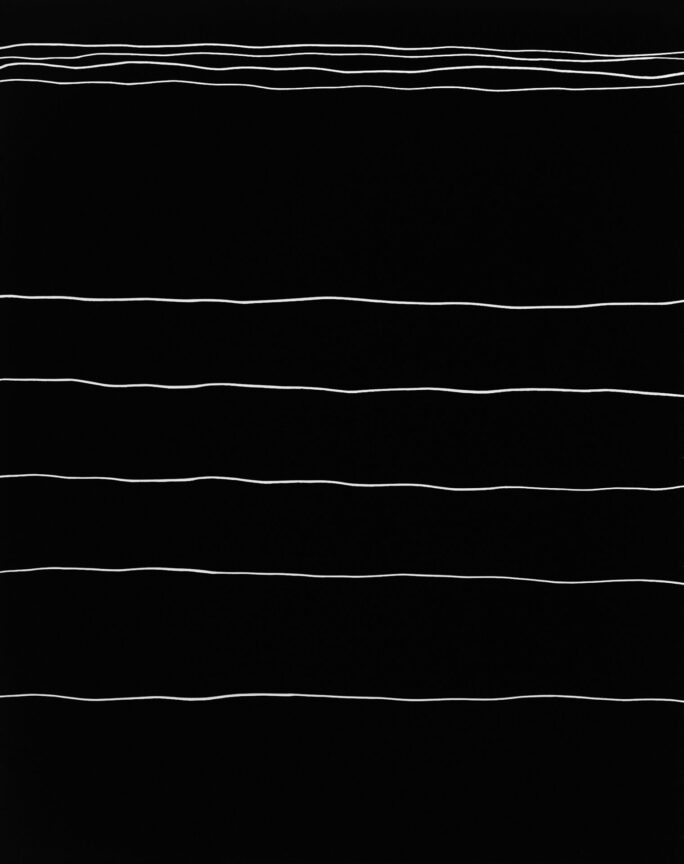
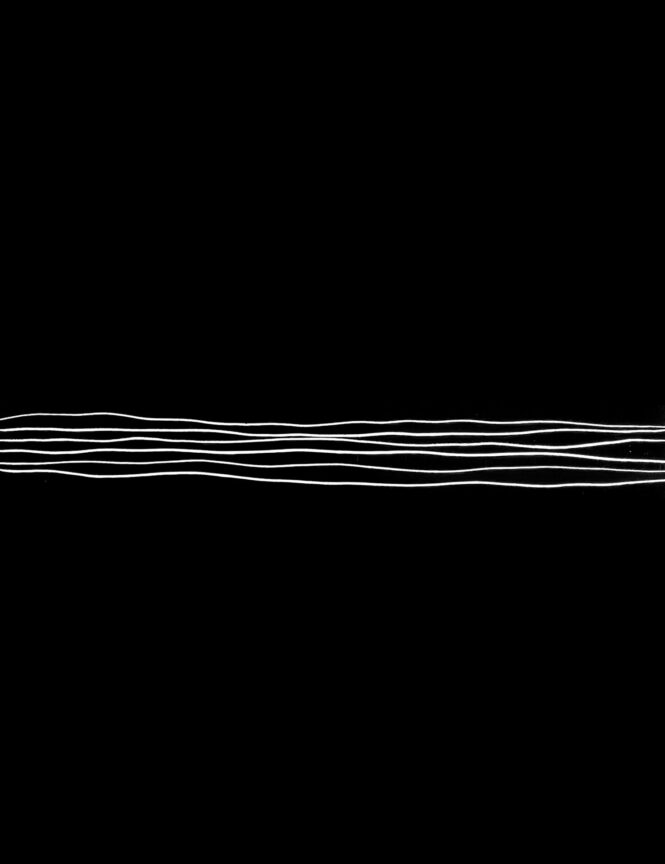
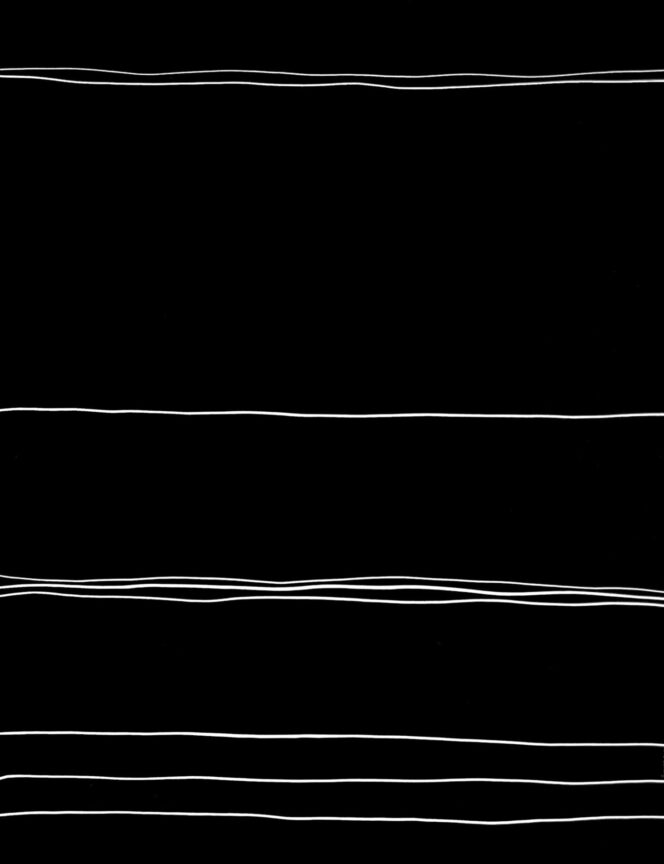
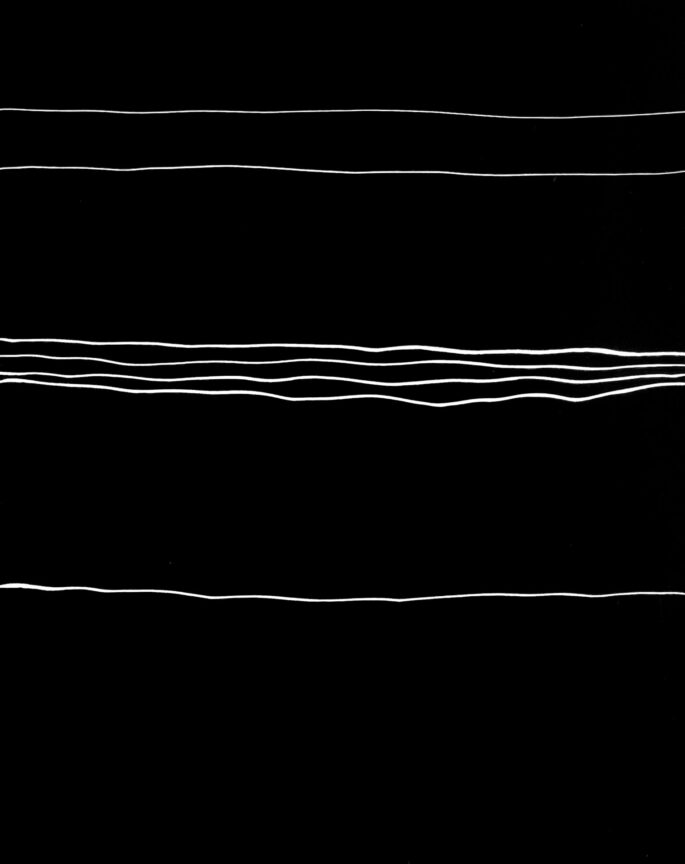
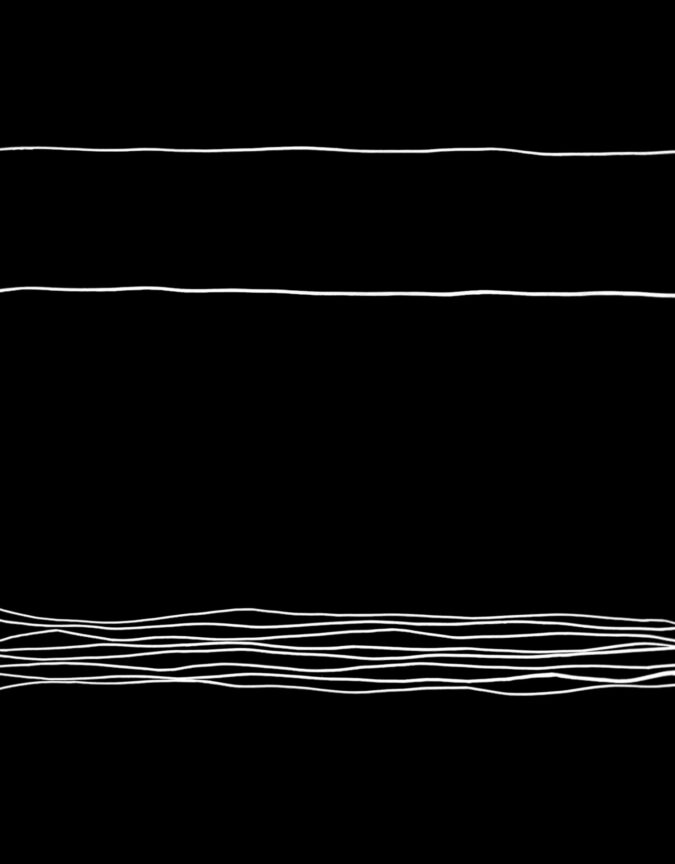
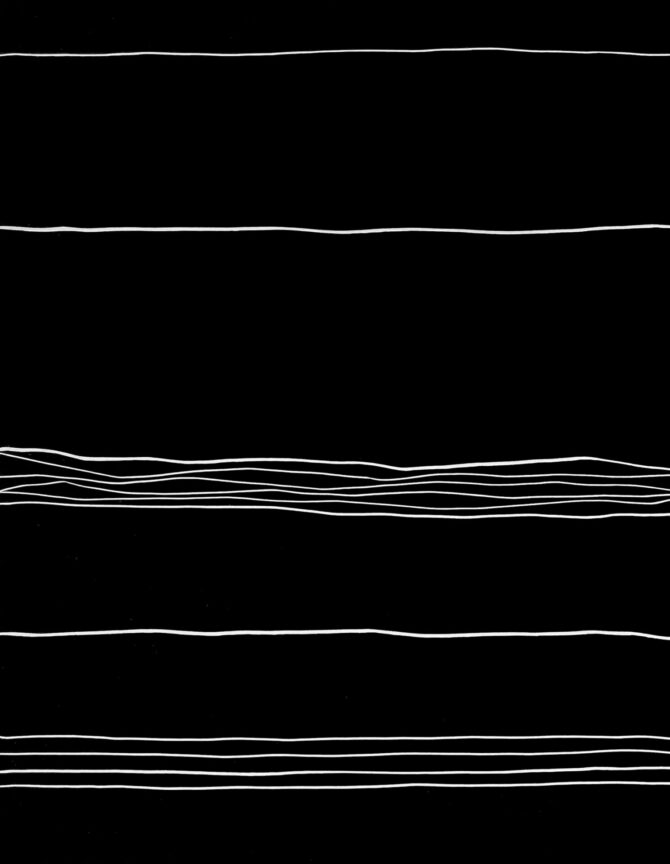
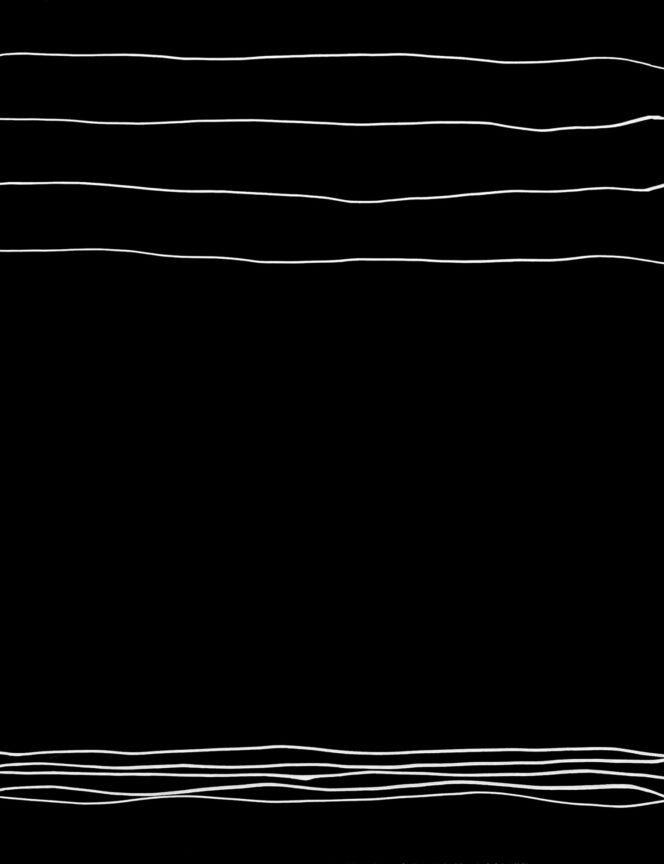
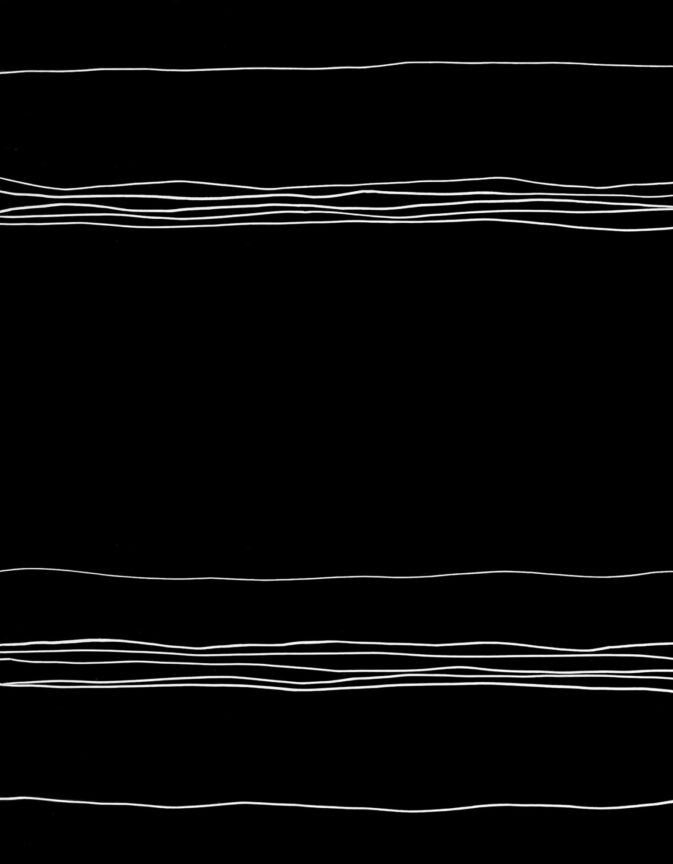
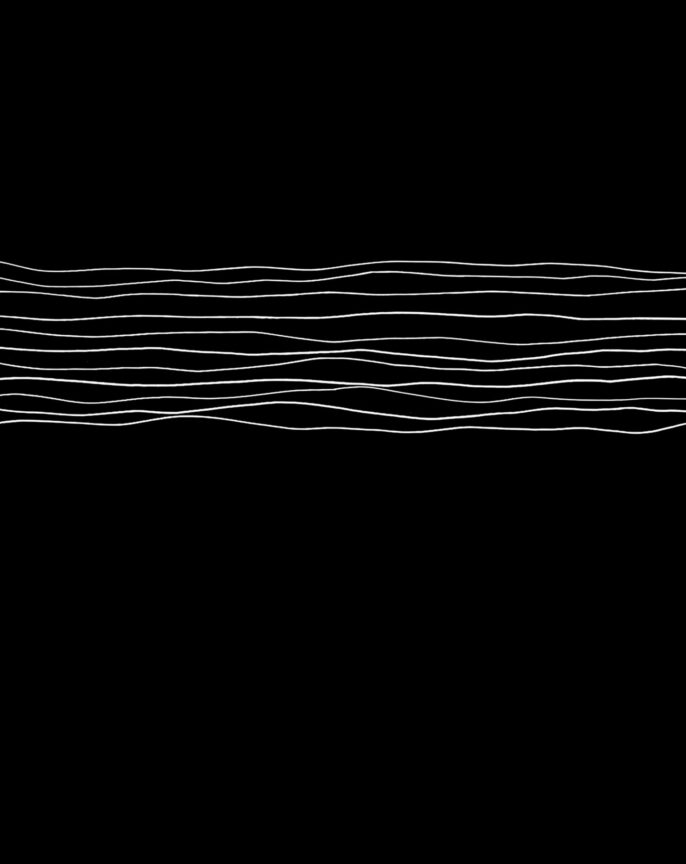
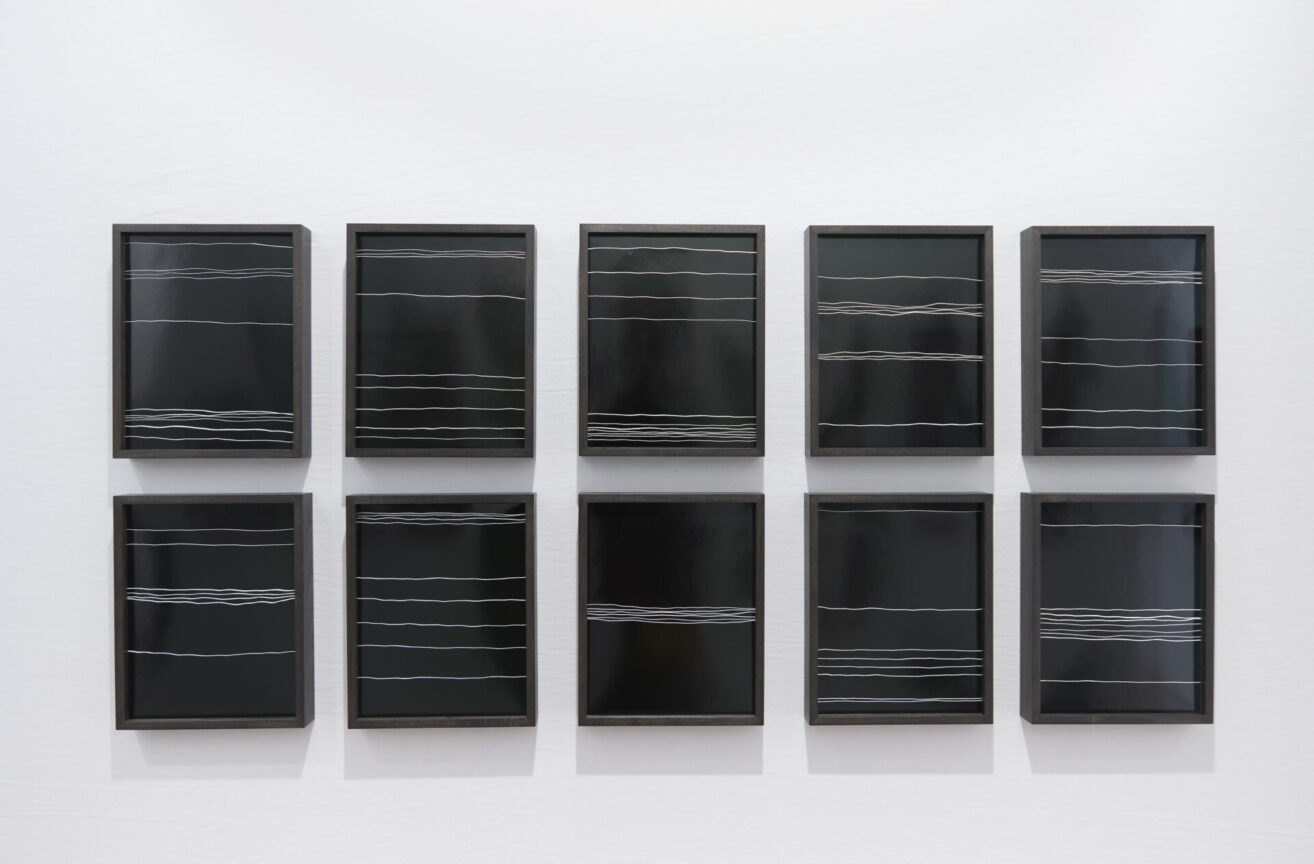
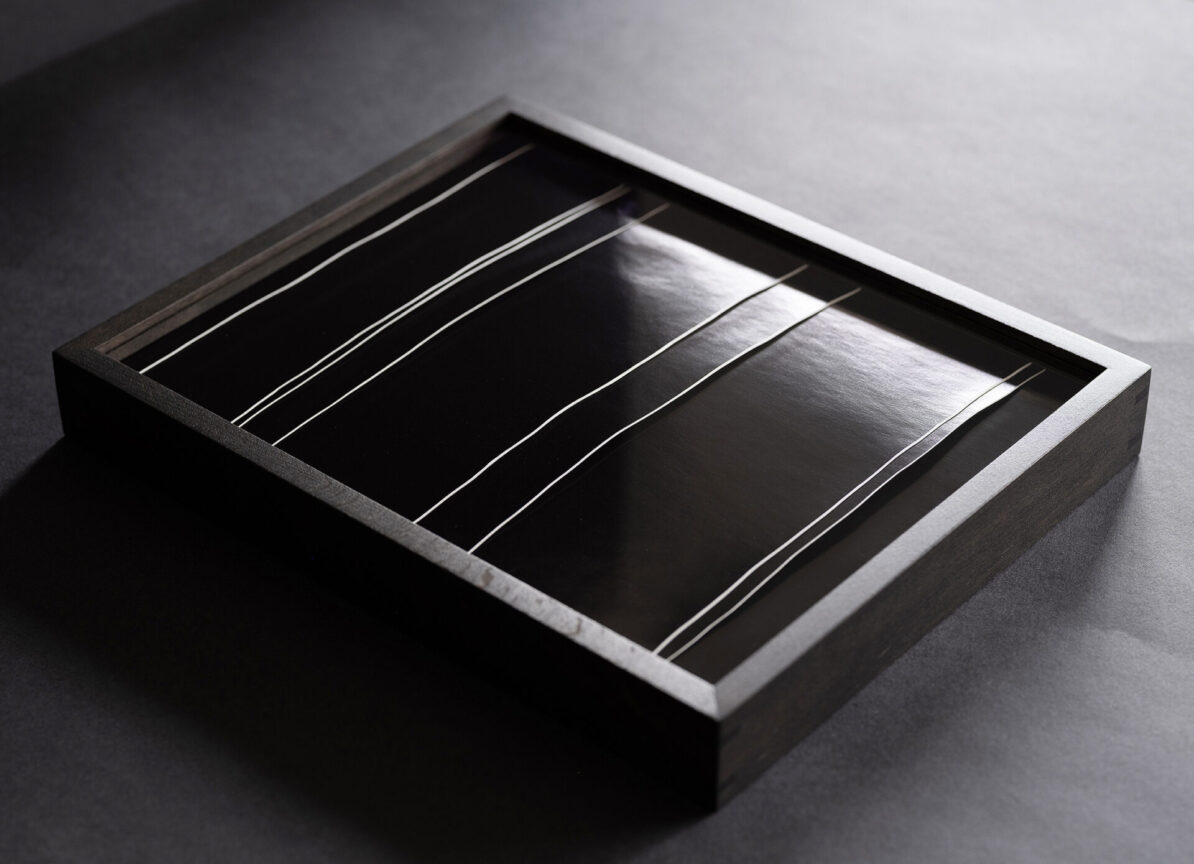
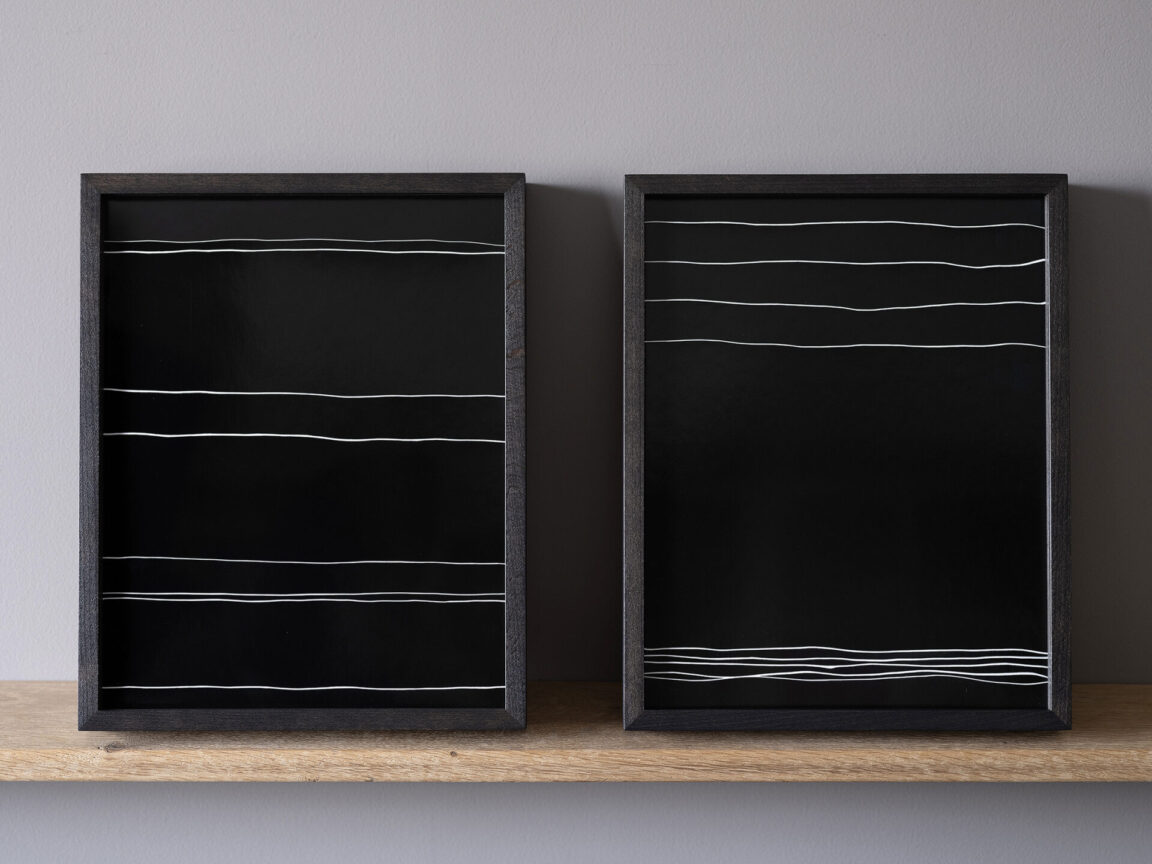
White matte lines on deep glossy black.
Layered analogue photographic paper. The pure material that leaves two-dimensionality behind through layering. Silver gelatine, drowned in light, becomes dense black, a black that throws the light back, conceals secrets, opens up a space. The radical cut edge as a drawing line, as the edge of a sheet, as an end. And then, in the interaction of the lines, suddenly a landscape, a sea surface, a musical score, a new piece of music.
OVEREEXPOSED was triggered by the loss of loved ones from my family and circle of friends. Four people died within six months, and the void they left behind was so dark that I kept thinking about overexposed paper.
I liked the absurdity of the analogue positive process, in which an abundance of light leads to deep black. So I opened boxes of long-stored AGFA photographic paper, which has not been produced since 2005. I opened it in sunlight and developed these sheets, so that shortly afterwards I had a stack of shiny black photographic paper, which I left lying around for a few months before I knew how I wanted to proceed.
Grief is a process and brings about transformation. It confronts us with our own mortality and underlines the fragility of all existence. Rilke wrote, ‘the dead die within us’ and so I carry them with me and live. I was only able to continue working after about nine months: bringing the white into the black with a diagonal cut with a carpet knife, seeing light again, breathing deeply again. The hand cuts, sometimes shaky and weak, sometimes straight and determined, and the breath flows. I am here, I want to stay and dance again.
OVEREXPOSED seems radical, abstract and new. However, when viewed alongside the works in the GRAUBAUM UND HIMMELMEER series, images of beech trees and the sea, the connection and further development become apparent. After years of travelling and collecting the world, he now retreats to his studio, working on images without the world, protected and quiet.
As so often, the inspiration for my work comes from Hiroshi Sugimoto, whose works from New York cinemas transform all the images of an entire film into white nothingness. His excess leads to white because he inserts a negative in between, mine to black. The French painter Pierre Soulage, whose long exploration of black has led to monochrome paintings that change and vibrate when you walk past them, was also an inner dialogue partner for me. The way his ultra-black reflects light, refracting and amplifying it, has always fascinated me.
My small format in this series (30.4 x 24 cm) contains the right ratio of black surface to white line, which swings and resonates with the movement of the hand.
„Groping in the void, I seek to grasp the white thread of the marvellous, which trem bles and vibrates, and from which dreams emerge with the sound of a stream flowing over precious, living pebbles.’ (Alberto Giacometti)